
Human Connection in Remote Teams
Want more of these in your Google results?
Working remotely has countless advantages, but it makes team building pretty hard. It’s easy to alienate your coworkers, because even with meetings, most of the time they’re a chat you see in Slack. That makes it easier to lose empathy, to be less collaborative, and to have less patience.
I’m lucky enough to have been with Uncanny Owl for years, a company that values the things we lost because of remote work.
We try to meet at least once a year in a place that works for most of us. After all, we have people on 5 continents!
This year we met in Montreal, Canada, from October 6 to 10.
In this article I’ll go through why remote teams lose empathy and how to get it back. I’ll use our meetup in Montreal as the example, along with research and what other remote companies do.
Hopefully it’s useful if you work on or lead a remote team.
Why remote teams lose empathy
Having worked remotely my whole career, unfortunately I used to see my coworkers almost like robots, instead of humans. I wasn’t that patient with criticism, and I wasn’t empathetic with their ideas when I thought they could be improved or changed.
Then, in 2018, I met the team in person for the first time, in Berlin, Germany. I met Saad and David and their wives, and Ken and Ryan (the company’s cofounders) and their families. The team was smaller then.
The relationship with them changed completely after that meetup, at least from my perspective.
I’ve felt that change with absolutely every person I’ve worked with remotely and later met in person. We alienate our coworkers when we only see them on a screen.
After this year’s meetup, I asked my colleagues to take an anonymous survey.
| Question | Said yes | Said no |
|---|---|---|
| Has it ever been difficult to get to know a coworker beyond work while working remotely? | 89% | 11% |
| Have you ever felt frustrated by a coworker's decision because you did not understand their reasoning? | 78% | 22% |
| Have you ever felt disconnected from someone you work with regularly? | 67% | 33% |
| Have you ever misread a coworker's tone in Slack? | 56% | 44% |
| Have you ever avoided disagreeing with a coworker on Slack because you were worried they might take it personally? | 44% | 56% |
Tone is hard to read in writing, even if the person who wrote the message thinks it’s obvious.
In a 2005 study, people who sent sarcastic or serious statements by email expected their readers to get the tone right about 78% of the time. The readers only got it right 56% of the time, which is statistically no better than chance. With voice, it went up to 73%.
Microsoft’s 2022 survey of 31,102 workers found that 56% of remote employees said they had fewer work friendships since going remote. And 50% said they felt lonelier at work than before.
What changes in person
On every trip since Berlin, except for one, I’ve met someone new for the first time. Each time, I had the same feeling as in Berlin.
Meeting the people you work with every day has a gigantic impact on your relationship with them. Besides any virtual activity you could do, meeting in person has absolutely the best ROI, at least in my opinion, based on the way I’ve felt.
It doesn’t necessarily change how often we talk in Slack, but it changes the quality of the relationship. It changes how I take their ideas, and how patient and empathetic I am with them. I care more for them when they can’t be there because of something personal.
I listen more, I’m more open, and I lower my guard. I don’t feel as frustrated.
Two researchers who studied 164 people on globally distributed teams proposed that site visits change the relationships between distant coworkers in lasting ways. People get to know each other’s personalities, roles, cultural context, and ways of communicating and working. After they go home, they act like closer coworkers, and that brings them even closer.
I’ve also learned about the struggles of each team member, and about their responsibilities. When you see that, you understand why sometimes things didn’t go the way you wanted.
| Question | Said yes | Said no |
|---|---|---|
| Did you leave Montreal feeling closer to the team? | 100% | 0% |
| Did you learn something about a coworker's life or interests in Montreal that you did not know before? | 100% | 0% |
| Did talking in person help you better understand a coworker's perspective? | 89% | 11% |
| Did you find it easier to discuss work face-to-face than remotely? | 89% | 11% |
| After the meetup, do you feel more comfortable reaching out to coworkers? | 78% | 22% |
| Did a conversation in Montreal change how you see a coworker? | 67% | 33% |
In person, the difference in work conversations was mostly the speed, but their quality changed too. I could tell way more easily how important something was for someone. And as we spent a lot of time together, any of my coworkers was easy to reach for a conversation about anything, including work.
One study found that software engineers who sat near their teammates got 18.3% more feedback on their code. Most of that extra feedback went to the engineers who were newer at the company.
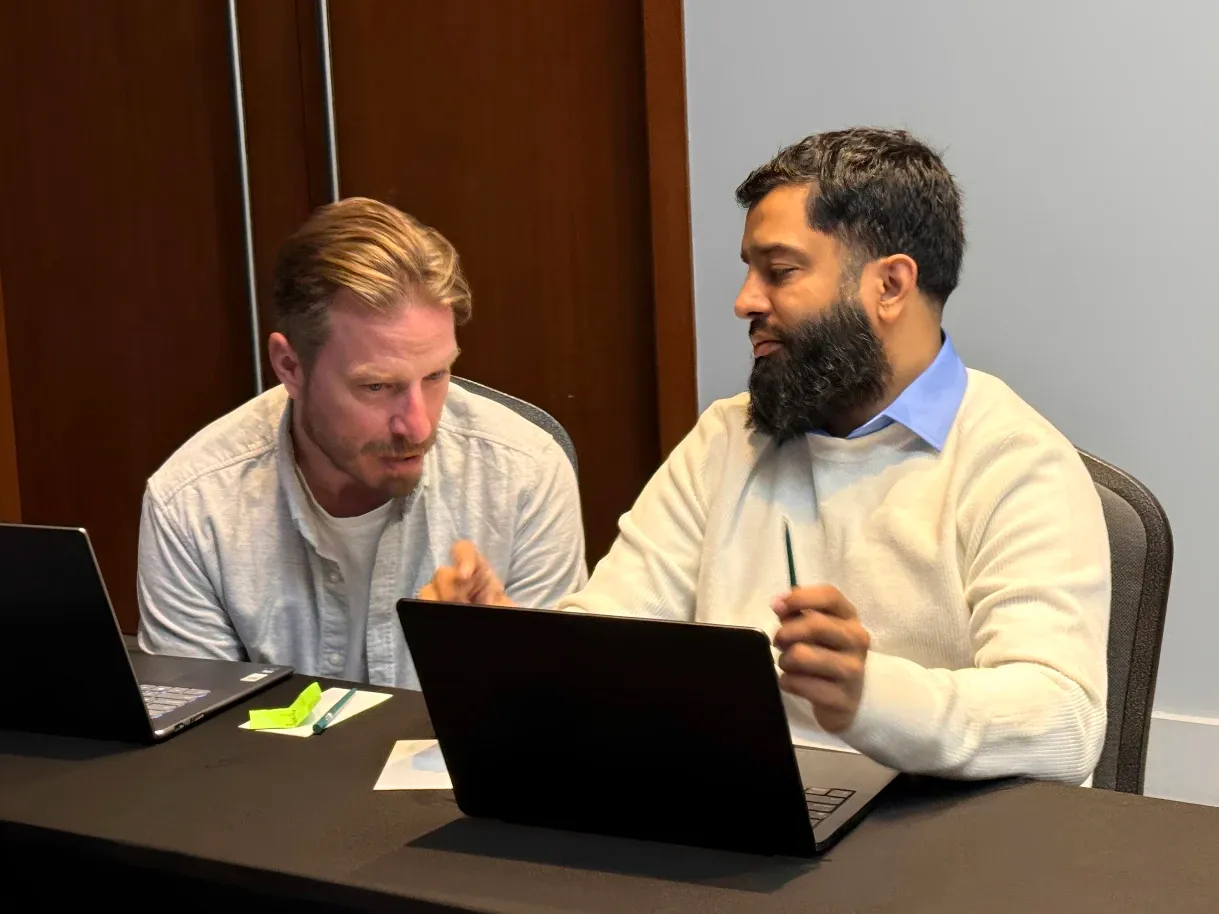
Getting to know people beyond work
I’ve been working with some of my coworkers since I joined the company. A lot of us have been at Uncanny Owl for a long time, since turnover is minimal. The fact that turnover is so low already gives you a clue about how incredible it is to work at Uncanny Owl.
Anyway, I’ve known many of them for more than 8 years, and even so, every time we get together, I learn something new about them.
In Montreal we talked about life and cultures, debated absolutely everything, and tried to predict what’s going to happen to the industry. Deep conversations like those are a chance to learn and to question your own beliefs.
Since meeting the team in person, and not before that, I sit with them to ask how their culture differs from the ones I know. It makes me humble in the way that it reminds me I just don’t have, and will never have, all the answers, and that life is about constantly learning.
Often we’re just used to specific things working the way they work. To the “status quo”.
Sometimes I get the impression that most of us think we’re above average and have the answers, and that the others aren’t bad people, but haven’t come to the same level of realization we have. These conversations make you question exactly that. They make you question your ego and your beliefs, and they make you realize that the world is much bigger than your own experience.
To me, having an open mind means accepting what you don’t agree with and understanding what you don’t understand yet, while being open to changing the thoughts and ways of seeing life you grew up with, the ones that have been with you for decades.
It’s also beautiful to see how excited anyone gets when you ask them about their culture. They can talk about it for hours. It’s their identity, after all. I love to talk about mine too. I like to tell them about my food, the mate, the music and everything that makes me feel proud of being from Argentina.
I’ve learned a lot about life since meeting them. I couldn’t fit it all in an article. It goes from how cultures communicate appreciation and love (for example, my Canadian coworkers don’t usually show love through touch, like we Latin Americans do, sometimes too much haha) to how they find purpose in life. It also made me feel the world isn’t as big as I thought, because people are more similar than different, no matter where they’re from.
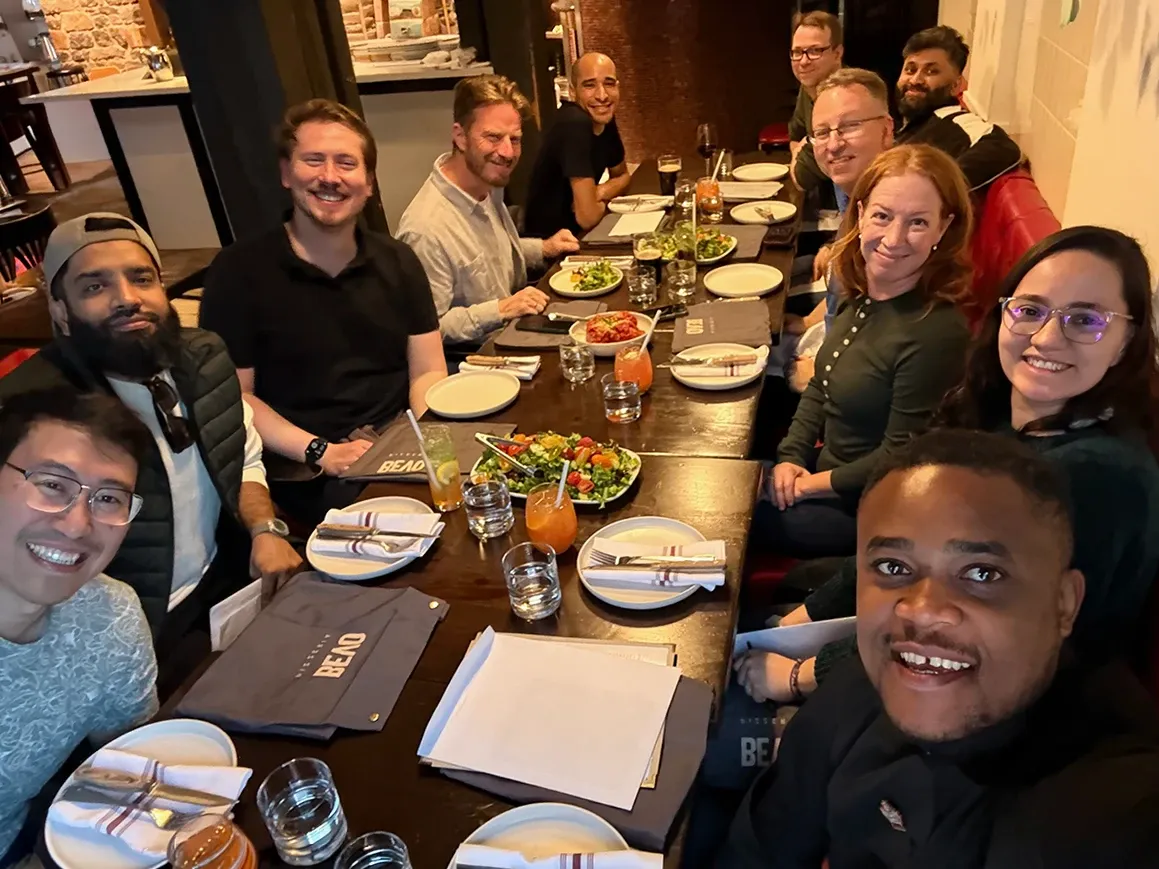
Meeting up is also an opportunity to value what we have. Many times you find yourself having what others have been looking for for years, but we normalize it because we can access it easily.
Meeting some of my coworkers in person ended up creating a relationship with them that transcended work. That kind of relationship is hard to build for people who just joined a remote team.
In 2020, researchers surveyed 267 developers who had just joined Microsoft, and most of them had never met their teammates in person. The researchers found that those new hires struggled to ask for help.
So, bring new people to a meetup as early as it’s possible.
This year I met Ani (our new growth manager) in person for the first time. Ani joined the company about a quarter before the meetup. I’m really happy he did.
He brought new ideas to the growth team, and the motivation to try them. The growth team was already doing good work, but he joined and started asking the questions we stopped asking because we got used to doing things a specific way.
Ani is also the first person from Africa I’ve met in person, so I had a lot to learn. I didn’t learn as much about his country, Nigeria, as I would have liked. I learned, however, that people there seem to love spicy food :)
But in all seriousness, Ani reminded me that we’re not that different, whatever country and culture we’re from. I’d already felt this with other colleagues, like Muneeb, who lives in Dubai.
All of them are absolutely lovely people and it’s a pleasure to work with them.
How the leader treats people
The truth is that I don’t know what Uncanny Owl does differently. It’s the only company I’ve worked for that does meetups.
I really notice how Ken treats us as equals and friends, and how much he trusts us. He doesn’t follow a rigid manual or ask everyone the same questions. He understands that each person is different and adapts his approach accordingly.
That makes all of us behave the same way with our colleagues. If the team leader listens and respects everyone, why wouldn’t the rest of the team do the same?
Ken also keeps things professional but informal. I think that’s extremely important.
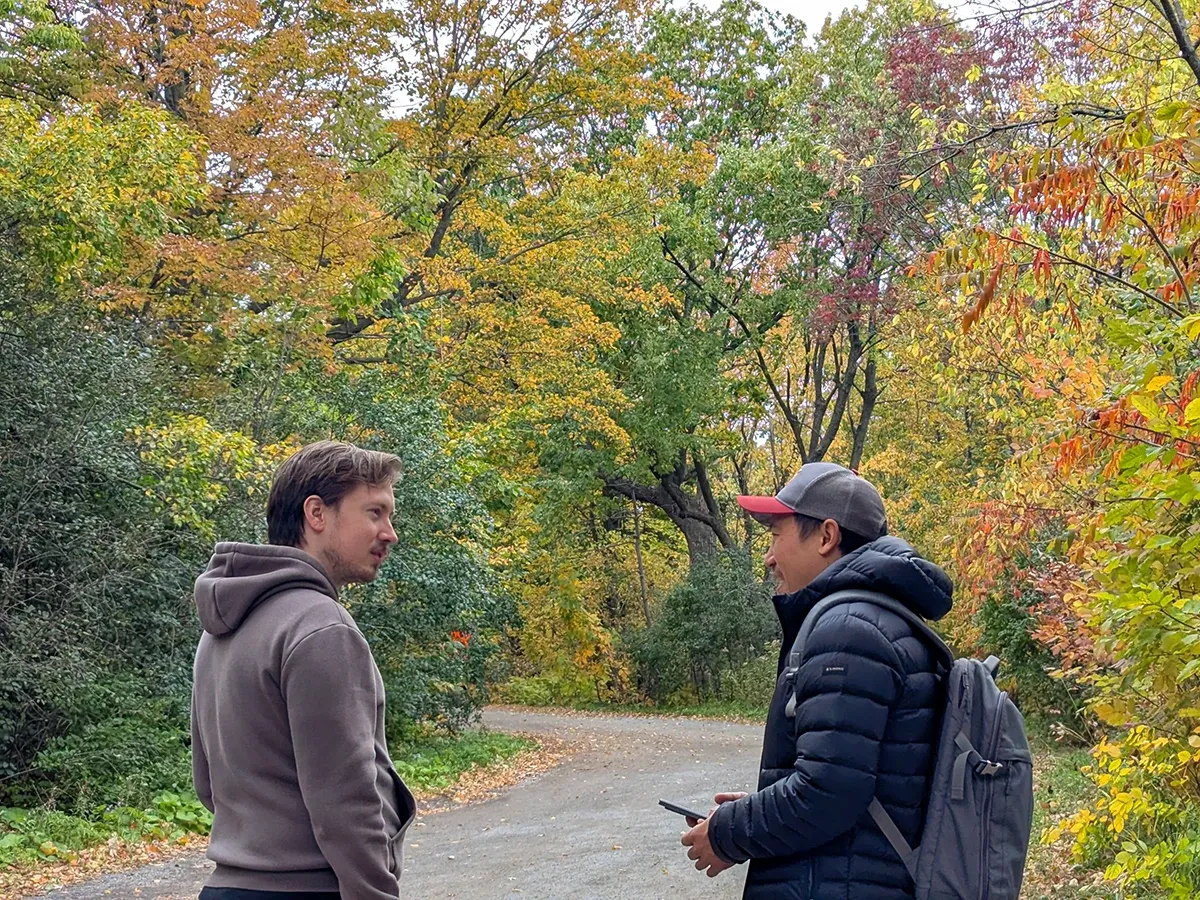
Time for things that aren’t work
Besides a few meetings to get up to date on what others are doing, or on the approaches they follow with the latest technologies, a meetup is an opportunity to truly connect with your colleagues, and for everyone to become more than colleagues, to become friends.
Researchers had 75 global virtual teams do two weeks of trust-building exercises, and the exercises changed how members saw one another’s skills, honesty, and good intentions.
At our meetup, Dani from our growth team ran an icebreaker where we had to guess a celebrity, a country, or a brand from emojis. The winners got fun gadgets, like the ridiculously big Enter key Saad won. I guess he’ll use it whenever he wants to send a message while he’s mad.
David got a pomodoro timer, and Ken got a LEGO-like “This is fine” set (perfect for moments of doubt).
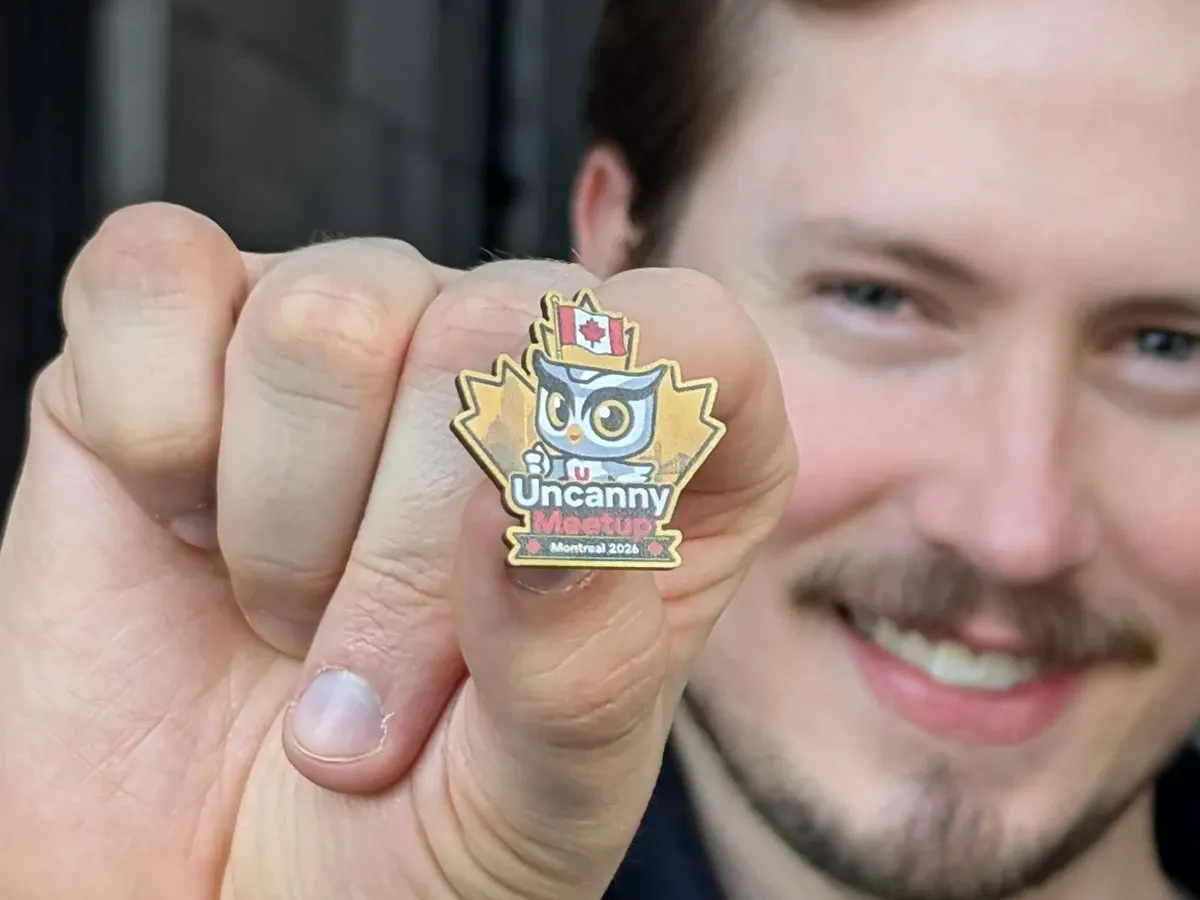
We also got funny pins to share the feelings we get while working, like a recognition for not being the worst employee.
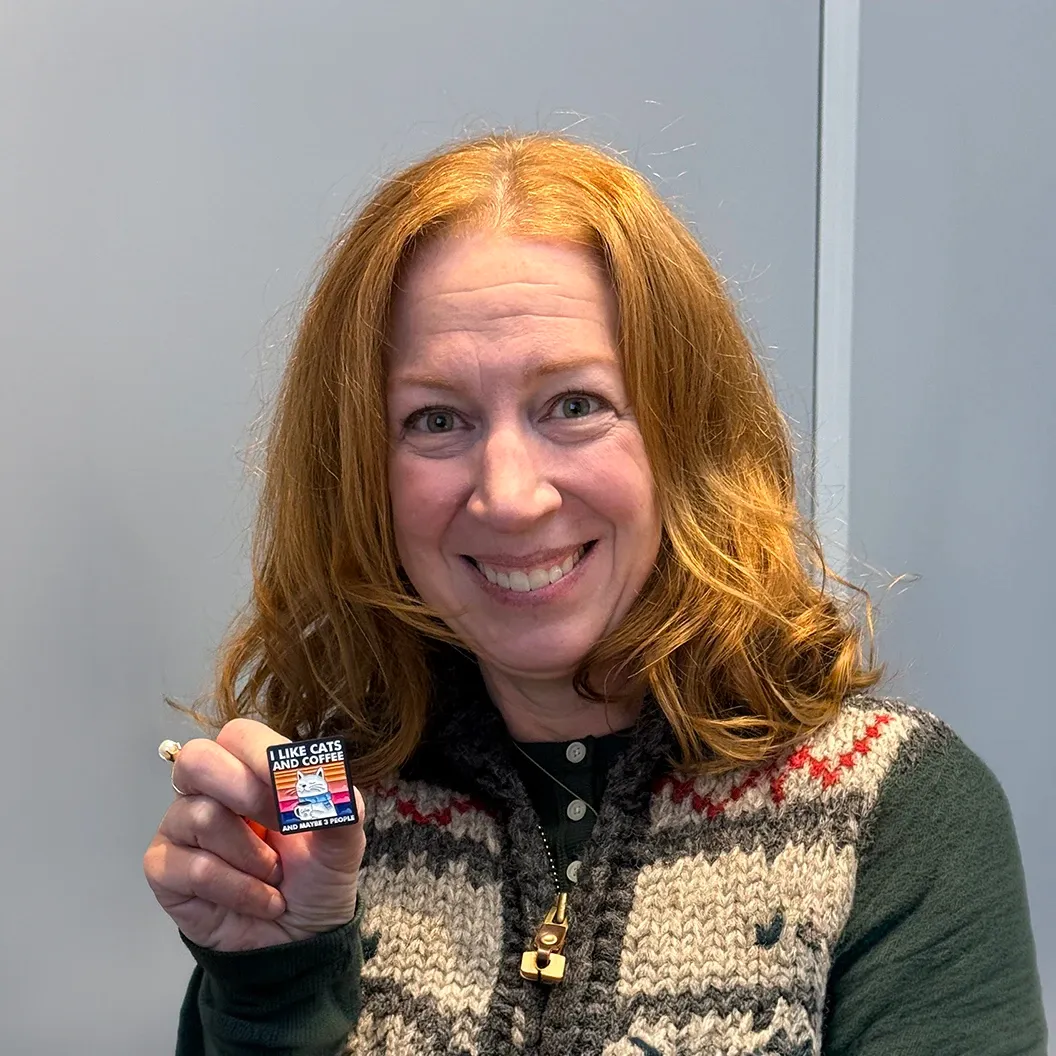
Kim's pin
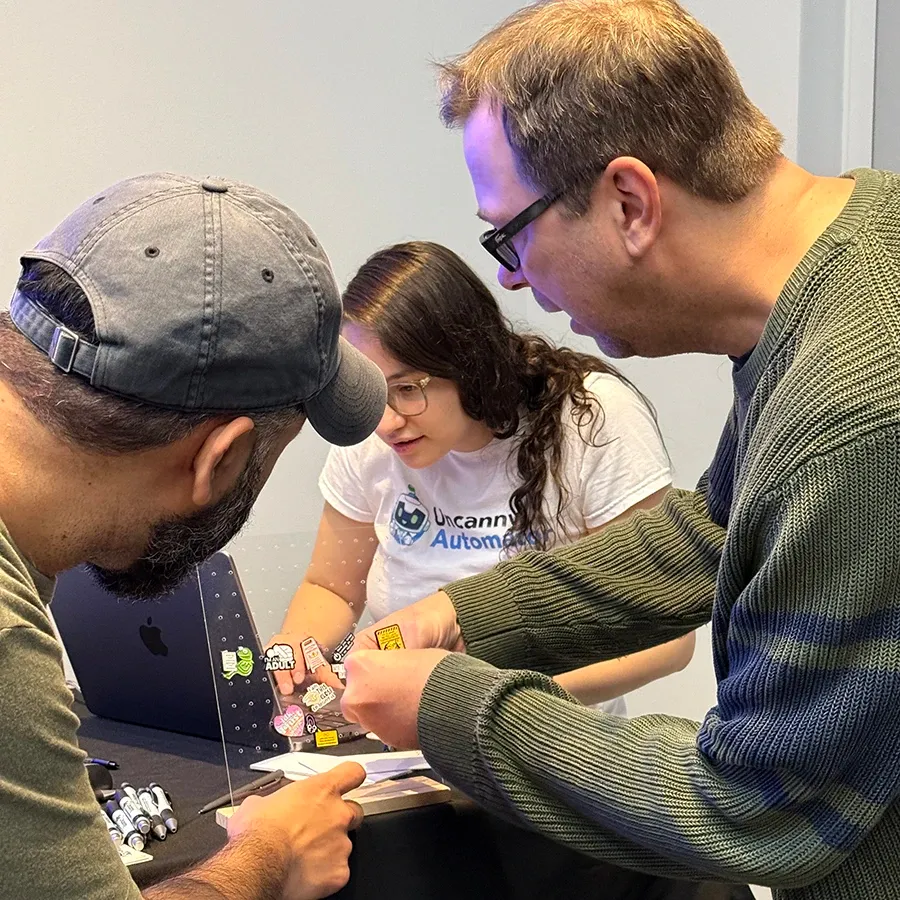
Saad and Curt picking prizes
GitLab’s handbook says the goal of its all-company Summit is to build trust through social connections. The Summit usually lasts a week. It mixes company-wide and division sessions with an unconference (sessions the attendees set up themselves), excursions, and social time.
Automattic’s field guide to meetups describes team meetups of about 5 to 10 people, where the team plans, works on a mini-project, and explores the area together.
Todoist plans its retreats on a 20/30/50 rule, with 20% of the time for work, 30% for planned social activities, and 50% for rest and free time.
At Uncanny Owl, there’s structured time, but Ken lets us have time for ourselves too. And he creates opportunities for conversations that go beyond work or productive stuff. The meetups Uncanny Owl organizes have presentations and meetings, but they’re built around people.
In the survey, 89% said the meetup would have been worthwhile even without presentations. And 56% said some of our work sessions could have been just as effective remotely.
A lot of the connection happened outside the meeting room.
Zapier’s CEO wrote in 2019 that they chose activities the team could only do together, even at the expense of product progress that week. For us, one of those was making our own pizza at an Italian restaurant! It was a really fun activity.
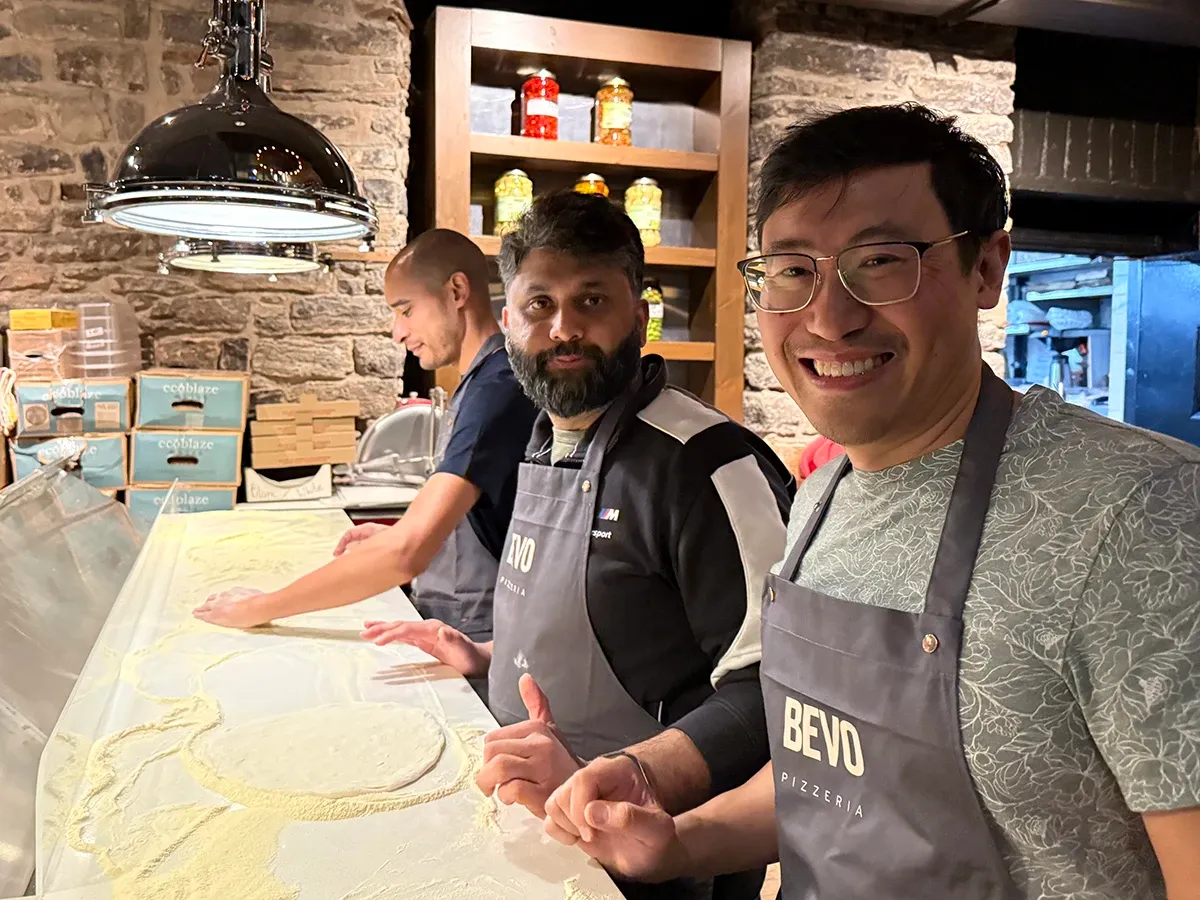
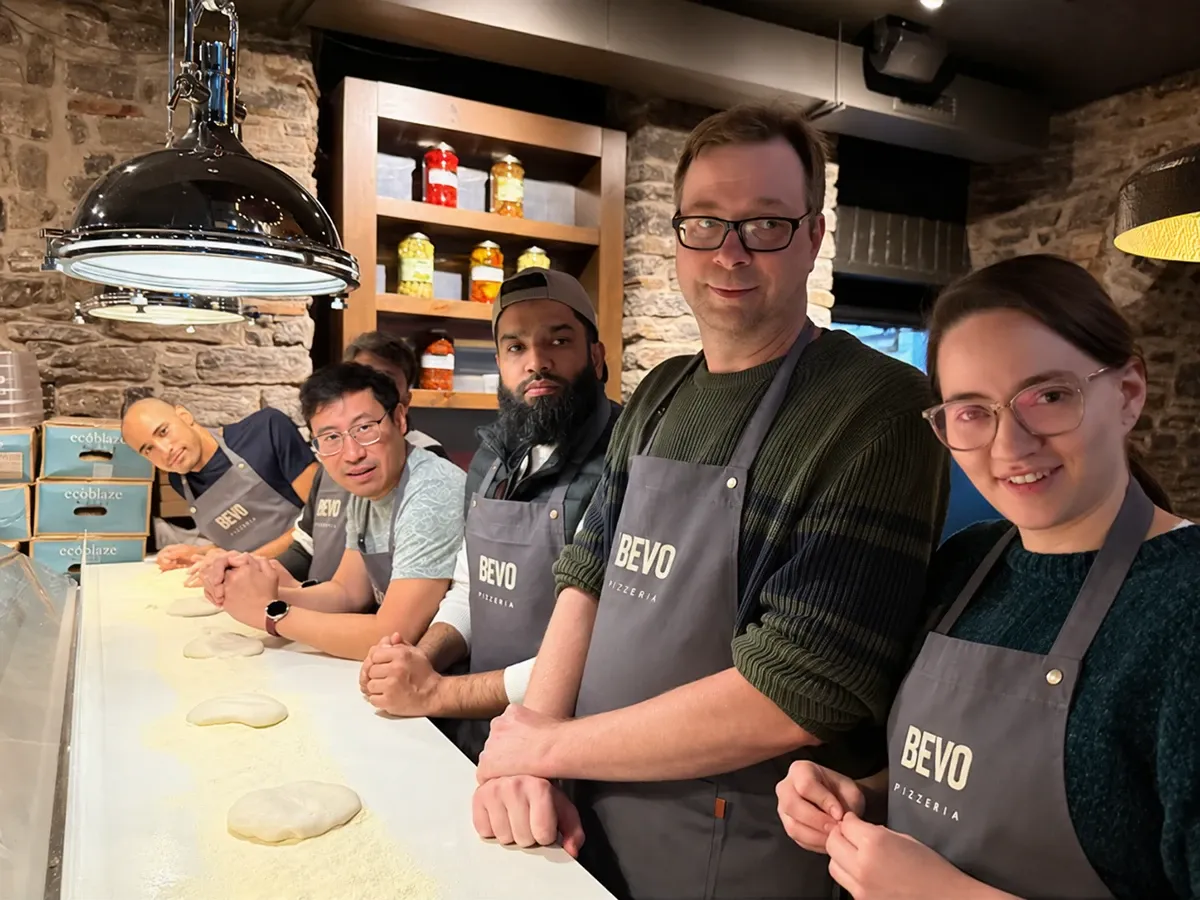
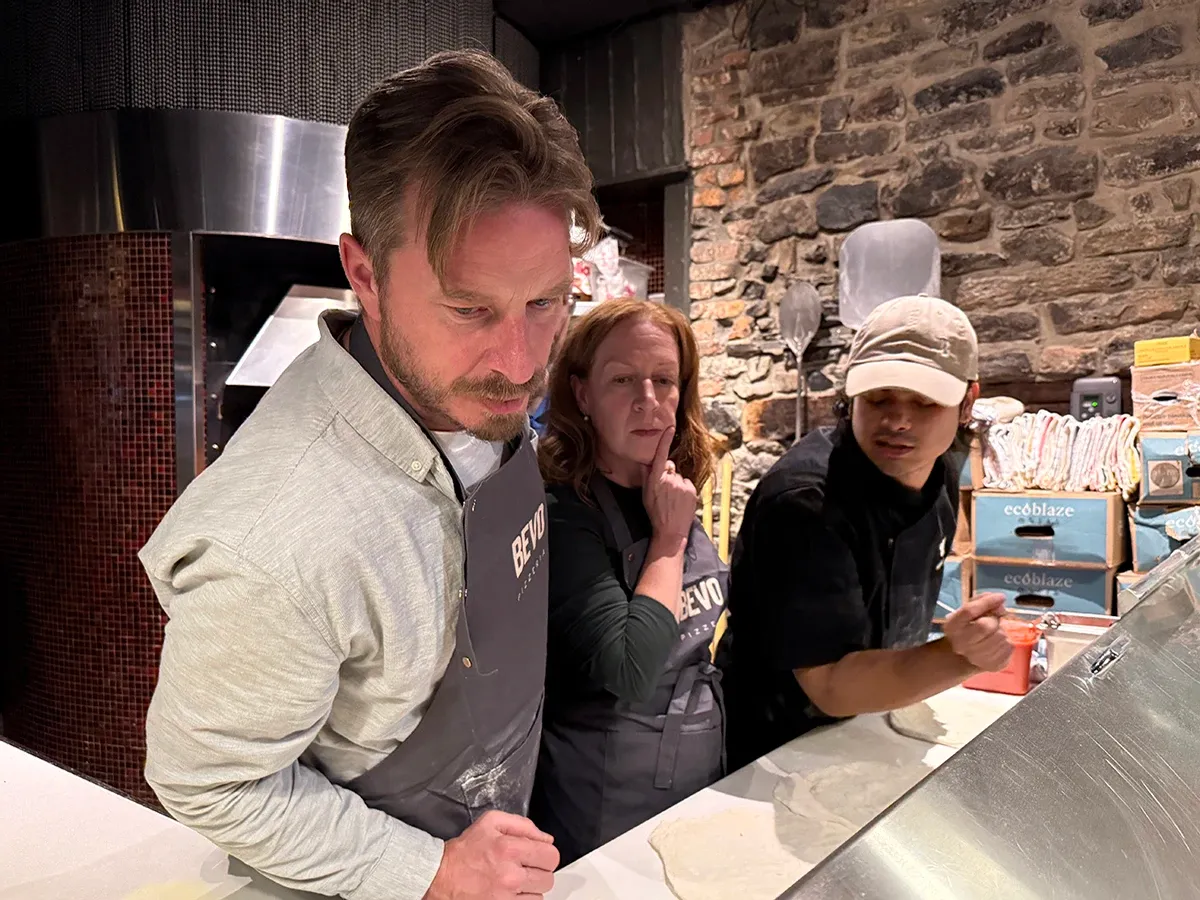
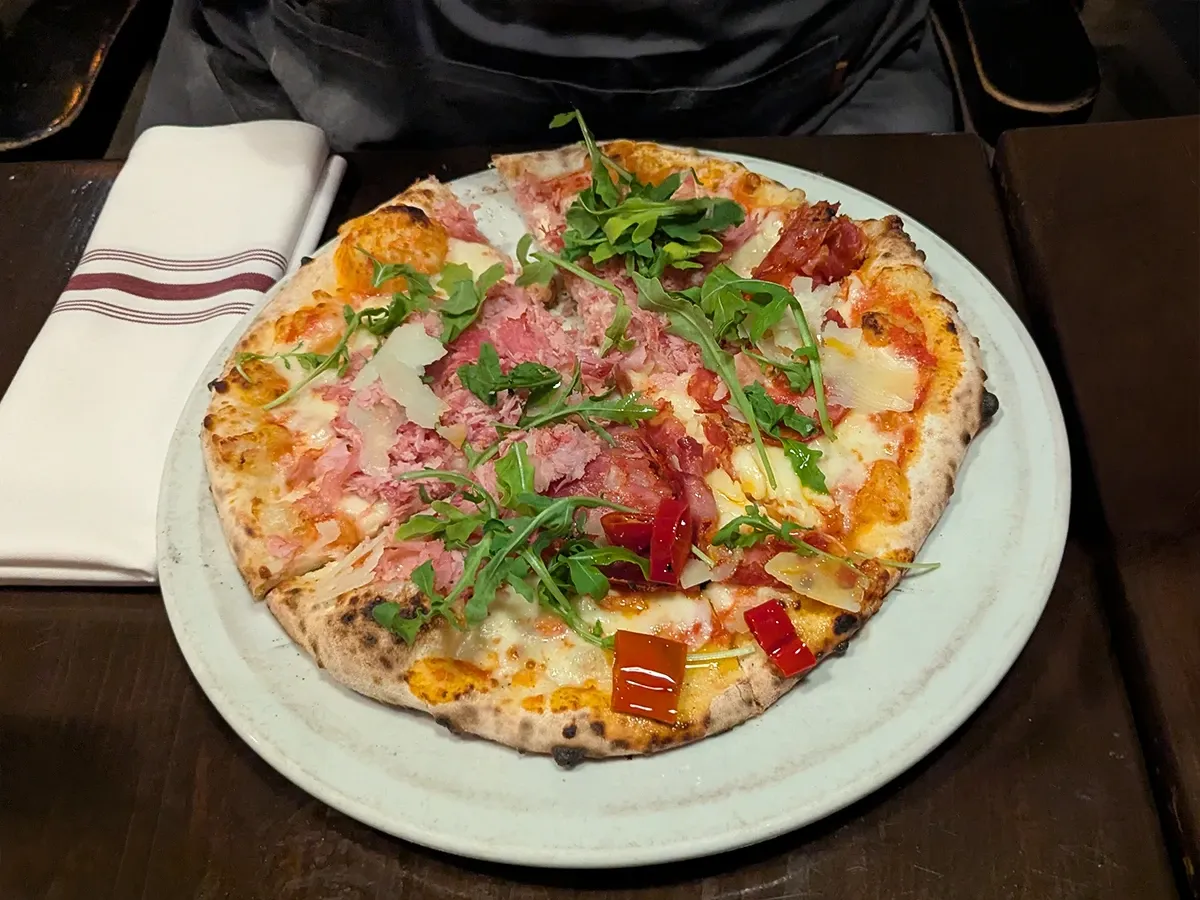
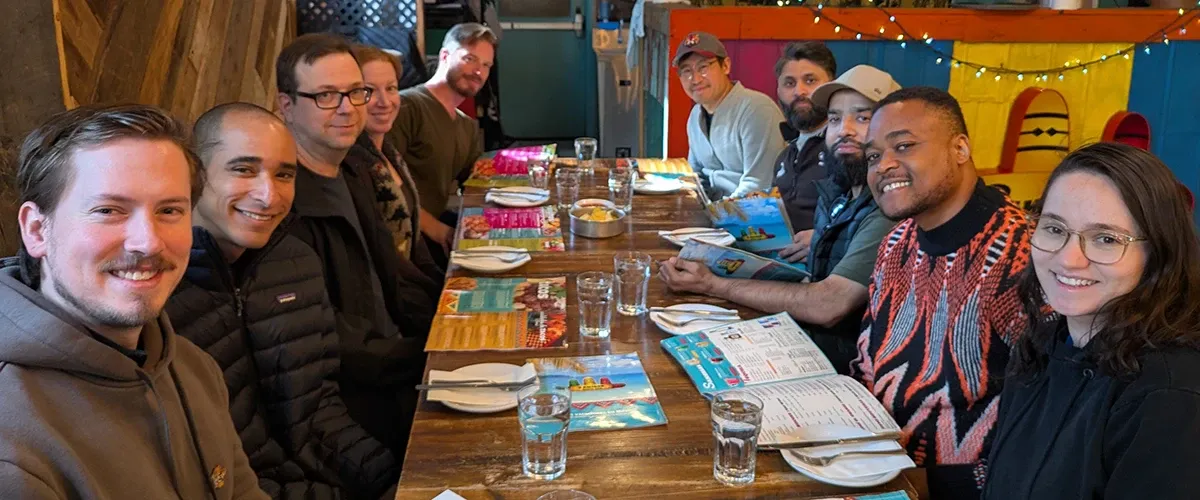
We also tried Mexican, Chinese, and Indian food.
Which activity helped you connect with coworkers the most?
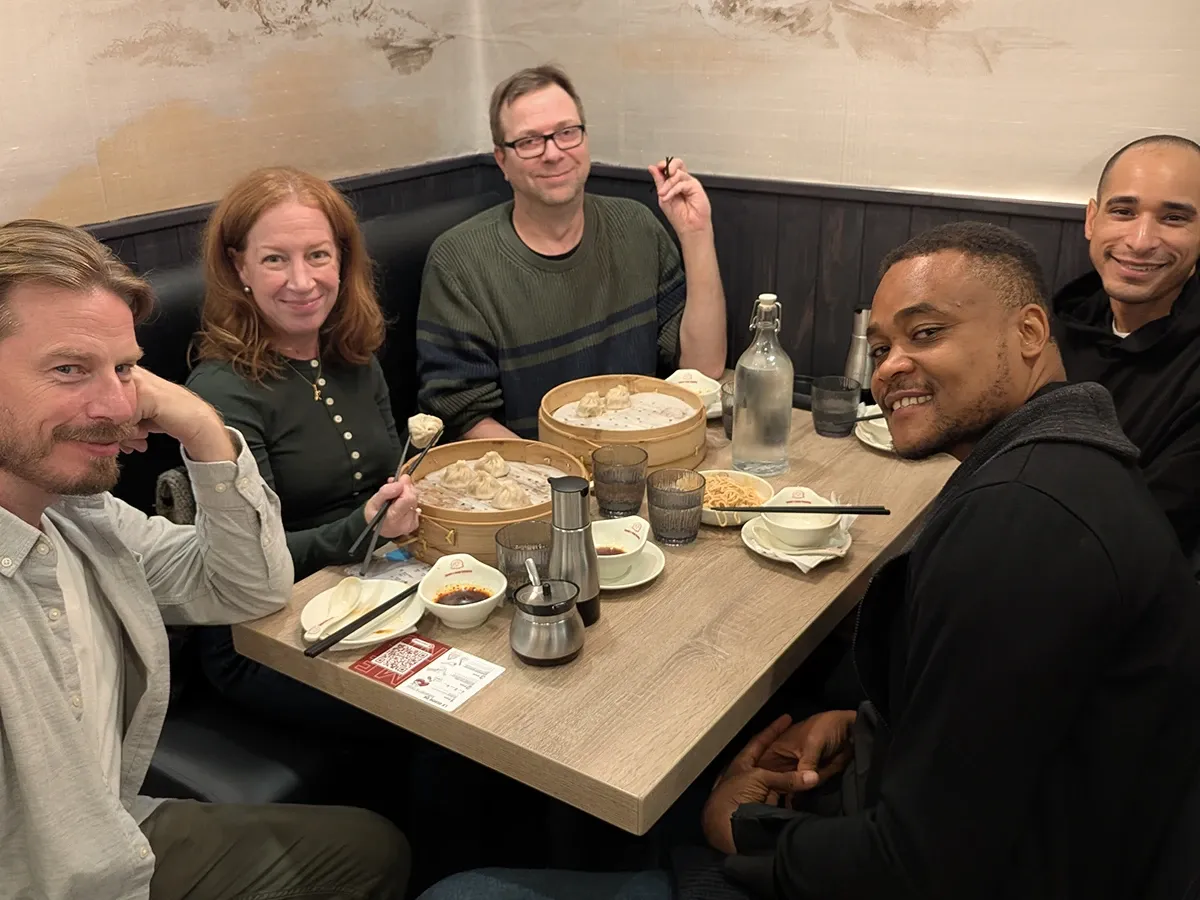
Shared meals
44%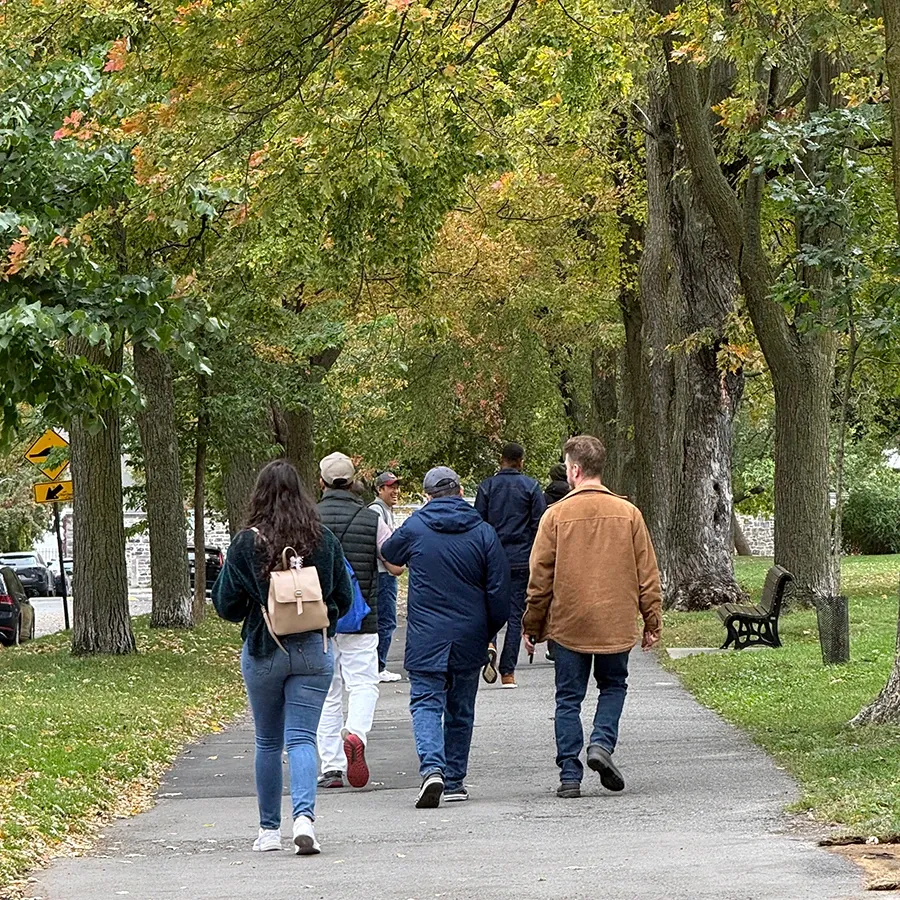
Walking around Montreal
33%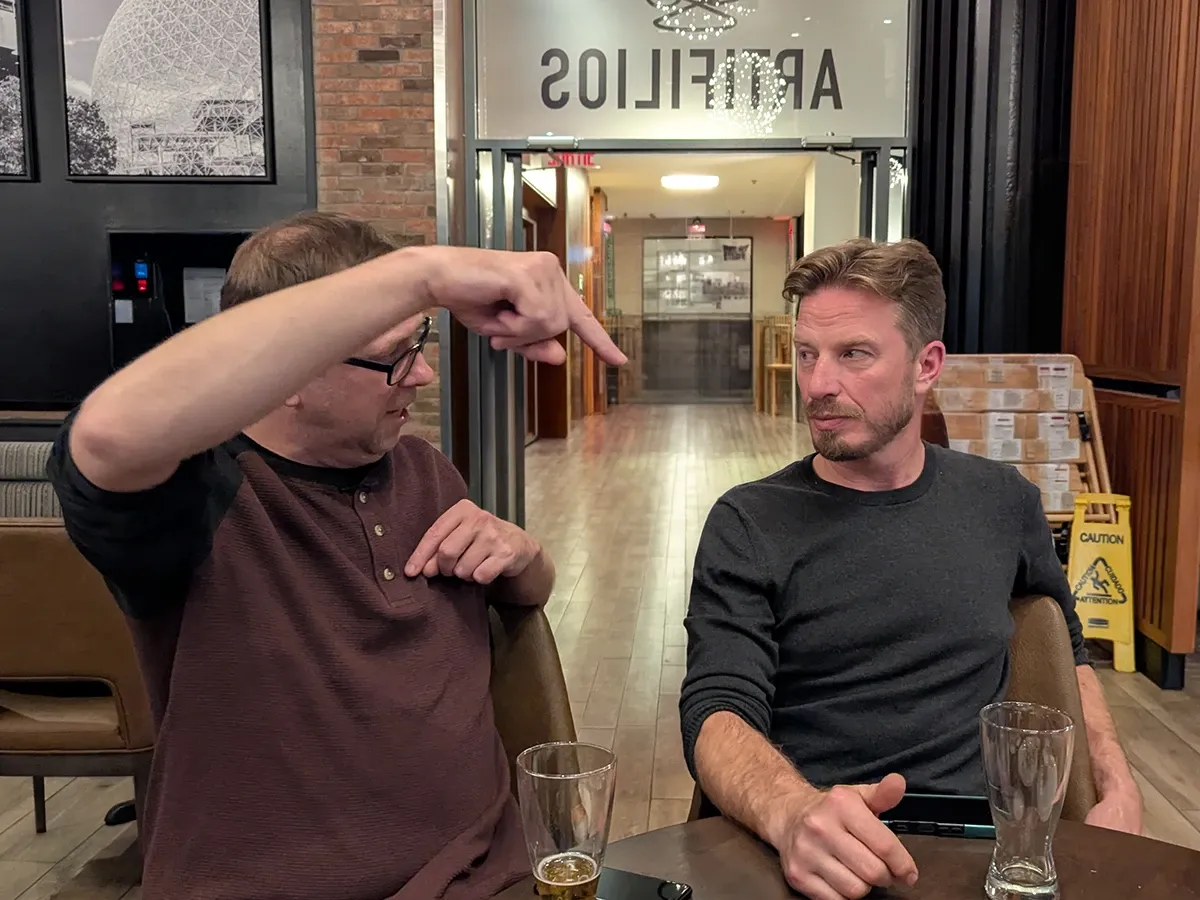
Happy hours
22%
| Answer | Picked it |
|---|---|
| Shared meals | 44% |
| Walking around Montreal | 33% |
| Happy hours | 22% |
Buffer’s retreats have small “personal story” dinner groups where teammates talk about their lives.
We walked together through a city that looks European.
One night we walked to the port just to see a cruise ship that was docked. I felt like a kid, with that feeling of adventure that’s so hard to feel nowadays.
We even had movie nights, watching interesting and a bit disturbing movies. David made the recommendations. He’s into that kind of stuff.
This time it was Backrooms and Barbarian (I missed that one). The last time we had one, in Banff, we watched Dune 2. I think I prefer Dune, sorry David.
Walking to see the cruise ship was probably the happiest moment of the trip for me, because of how fun it was. Watching the movie together was another one. Both were outside the work sessions.
We also gave a gift to Ken, a custom comic that features all of us. We ended up collaborating outside of work to create it, and the result was great!
Oh, and we also made a commemorative pin for the trip.
Learning from other roles
During the talks, all of us were in one room, from engineering and growth to support, content, administration, and our CEO.
That kind of mix gets rarer on a remote team. After Microsoft went remote in 2020, 61,182 of its US employees ended up working more inside their own groups. They spent about 25% less of their collaboration time with people from other groups.
In the same room, you hear how the other roles think about the product, and you take their ideas in a different way.
One of the talks was about working for the customer, and about users actually using the product. I had a different point of view on some of its ideas, and I changed my mind during the presentation.
I thought that what companies wanted was for people to pay the monthly subscription and then forget about it, because using the service costs the company money. I mean, what’s better than a paying user who doesn’t consume resources?
However, Ken made an excellent point about how the more you use a product, the more impact you have on it, for example on word of mouth. We saw clear numbers comparing users who use the product with users who install it and leave it there for later.
We ended up debating whether to show users the value of the product explicitly, with something like “you’ve saved X amount of time”, like I’m doing in TOCus, or to leave them to find the value on their own, like many other companies do. Claude, for example, doesn’t remind you of everything you get for the money you pay monthly. It’s so valuable that it just makes sense to pay.
Another session was a walkthrough of what it’s like to use our new product for the first time. It showed a lot of things that can (and will) be improved.
A lot of the time we get so used to what we’re working on, because we see it every day, and we worry more about the technology than the user, that we forget about some critical things that affect the user experience.
Our WordPress automation plugin, Uncanny Automator, is very powerful and has a lot of features. In fact, it could easily be three or four separate big plugins. So trying the new product from scratch, viewed from the outside, was critical.
If you want to try this with your team, ask a colleague from another role to use a new feature for the first time while everyone watches.
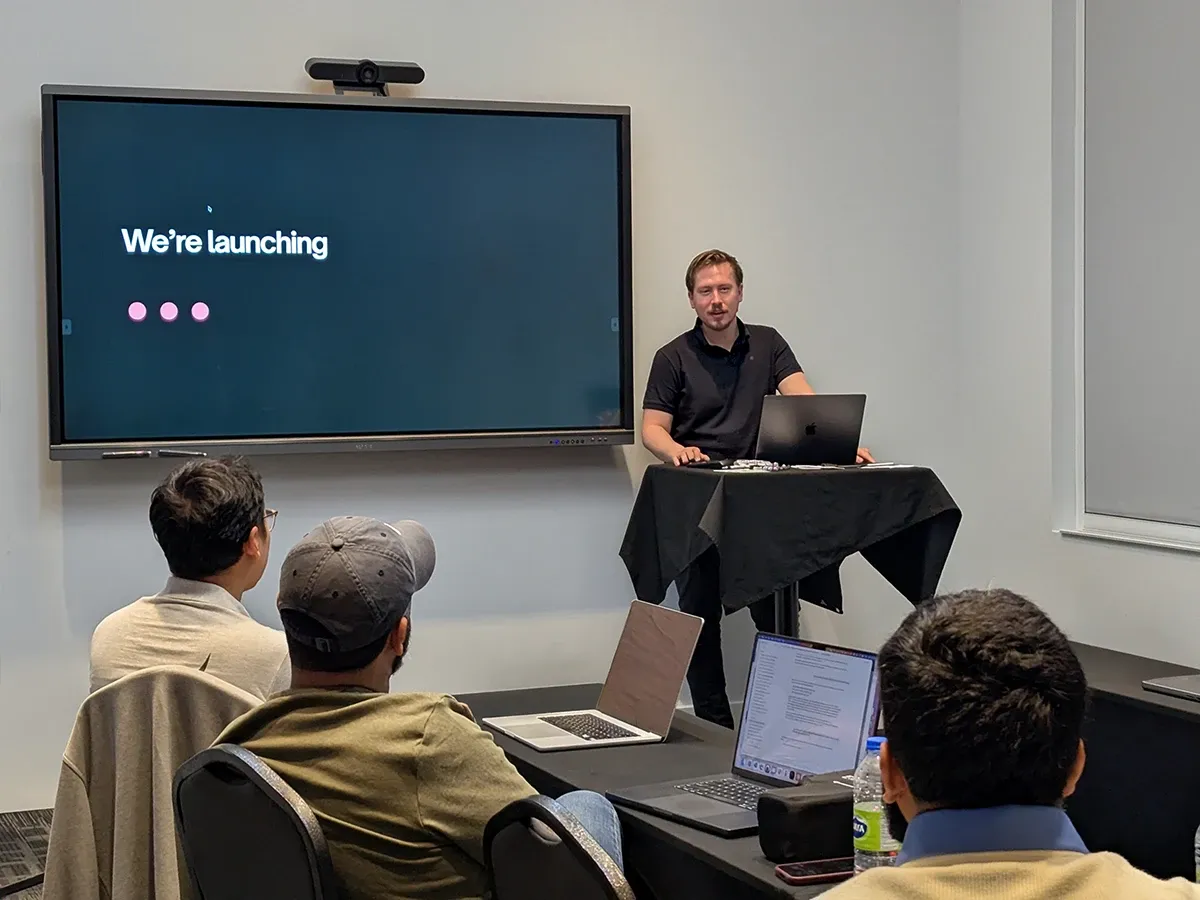
My own talk was about upcoming features, to let the growth team know what’s coming. I’ll be able to show what we’re doing soon!
I also used the opportunity to ask for internal feedback. While I was showing the interface, I asked them to take notes on everything that confused them or that they would improve.
The feedback was mixed, obviously.
Our content writer didn’t like the amount of “negative space” in the new interface, because it seemed like stuff was just floating around. The engineers found it a lot easier to use and understand than the previous interface. They’re the kind of people who usually use Automator.
And the growth team found that we’re not helping users enough to get started on an automation, which Automator calls a recipe. Most of them felt the “blank page syndrome”.
This teaches me that I’m still aiming many of my decisions at making Automator comfortable for developers, instead of for everyone. It’s not something I’m doing on purpose, though, so I have to get better at predicting it. I made notes of some changes I want to make to keep Automator easy to use. I’ll ask them for a virtual session to go through the UI and UX again.
Building for the user was also the topic of another talk. We did an activity where we had to use spaghetti to build a fictional product requested by a fictional client. We were divided into teams of three with different fictional clients, but we’re pretty competitive and ended up comparing our work anyway.
It was funny to see how each person would tackle the challenge in a different way.
We ended by watching Steve Jobs handle a tough question at the 1997 Worldwide Developers Conference, where he says, “You’ve got to start with the customer experience and work backwards to the technology.”
The last talk was about inconsistencies in our branding and potential solutions.
| Question | Said yes | Said no |
|---|---|---|
| Did you learn something new about what colleagues in other roles do? | 67% | 33% |
| Did a casual conversation give you an idea that could be useful at work? | 67% | 33% |
| Did any feedback make you rethink a feature or product decision? | 56% | 44% |
| Did a conversation or presentation change your opinion about a work-related topic? | 44% | 56% |
| Did you learn something new about how coworkers use AI? | 33% | 67% |
At your next meetup, turn some of the talks into activities where everyone takes part, whatever their role, like a usability test or a building challenge.
Why AI makes connection more important
It’s crazy how much AI is changing the way we work. Since I write about AI every week in The Brief, I’m up to date and I see what other companies are doing on the technical side. But it’s crazy to see how much it’s changing the work of people I’ve worked with for years and years.
In May 2025, we met in Porto, Portugal. Back then we were excited by how good AI was at suggesting code snippets, but we weren’t using it to write full directories of files with thousands of lines of code.
A lot has changed this last year. I wonder what’s coming up, and how many of the predictions we made in Montreal about the future and AI are actually going to happen.
For context, the models available back then were OpenAI’s o3, Claude 3.7 Sonnet and Gemini 2.5 Pro. Artificial Analysis scored those at 20, 18 and 16 respectively, compared to today’s 53 for OpenAI’s GPT-6 Astra, 58 for Claude Opus 5.5 and 53 for Gemini 4 Argon. In other words, the models available today are almost three times better than the ones we had a year ago.
For that reason, compared with Porto, people are much more confident in their abilities and in how independent they are. I see them more proactive, wanting to cause a bigger impact.
Nowadays, with AI available to everyone, I think creativity and proactivity are the differentiators. This might be a hot take, but to get an idea off the ground, I think they can matter more than the experience or technical expertise you start with.
AI can fill a lot of the gaps in what you know. It can suggest different ways to do something, and it can review what you made. You still have to question what it suggests and test the result, but not knowing how to do something is a much weaker reason not to try it.
But you need creativity to see what’s possible and to decide what’s worth building, and you need to be proactive to build it instead of waiting until you feel qualified.
Some of what you make won’t be good or useful, and for a small project or a low-risk experiment, that’s fine. You try something, get feedback, figure out what went wrong, and fix it. That’s how you earn experience.
AI can help you move through that process faster and explore areas you might never have attempted before. But you have to take the time to understand what you’re doing. Producing more work doesn’t automatically mean you’re learning more.
Experience and technical expertise still matter. I just think we can be more ambitious about what we attempt before we have them.
That’s why I put so much weight on creativity and proactivity. You can have access to all these tools and still do very little with them.
Ken is a fast thinker (and a fast typer, haha). AI has allowed him to work at the speed his head works. He can present his ideas and requests with mockups that show the actual UI.
Before, he had to talk with the person taking care of design (me), communicate the whole idea, and wait for me to make the screens, just to see if he liked how the abstract idea in his head looked. Then we would iterate on the design until he was happy with it. That back and forth was expensive for the company.
Now he does the back and forth with AI and gives me something he truly likes, which communicates his idea and not my interpretation of it. Ken also creates the final mockups for the pages the growth team publishes. That lets me work on other things.
With the other engineers I haven’t seen a lot of crazy things, since it’s what I do too. But I’ve noticed they trust AI more and more.
Dani now produces reports that used to take coordination with developers. She connects multiple tools and draws conclusions on why users cancel, how they get to purchase things, and where they come from. She’s also building pages that need custom functionality, with shortcodes or custom scripts.
David uses AI a lot to make sure we keep things consistent, and to create complex animations by building skeletons inside SVGs and then moving them. Even without the engineering background, he’s been able to create incredible animations with SVGs.
I see people who didn’t feel comfortable with code doing all kinds of incredible things now. I couldn’t be happier, because AI, at least for now, is being that tool (and not a replacement) that allows creative people to do incredible work.
Requests from our nontechnical colleagues have almost stopped. They’re way more independent, and they can progress on their work much faster alone.
We don’t need each other to get things done as often as we used to. Each person’s day-to-day team is now mostly AI agents.
But being more independent also means we talk to each other less.
Microsoft asked 31,000 knowledge workers in 2025 why they turn to AI instead of a colleague. The top reason they gave was that AI is available 24/7 (42%).
Workday surveyed 2,150 full-time employees at companies with more than 3,500 people, in seven countries, in March and April 2026. 33% of them rarely or never talk with a colleague about anything beyond work tasks in a given week, and 37% had used AI for companionship in the past year.
Workday’s report says that as AI answers more of the questions people used to ask their colleagues, the small conversations that build trust have to happen on purpose now.
I believe that as AI gets smarter and more people start to fulfill their social needs with AI, people might start treating people (our coworkers, in this case) as they treat AIs too.
I think in-person activities are going to get more important than ever because of this.
Staying connected between meetups
Coordination in person is much easier and faster, but I don’t think it’s something that can’t be achieved remotely. I think we need better tools that make us feel closer and more connected.
GitLab asks all new team members to schedule at least 5 coffee chats during onboarding. GitLab’s Slack bot also pairs random people who opt in for a chat every other Monday.
At Microsoft, 97% of new hires who met their onboarding buddy more than eight times in their first three months said the buddy helped them get productive quickly, compared with 56% of those who met just once.
Over the years I’ve tried daily 10-minute meetings, weekly meetings of an hour or more, virtual team activities like playing games, biweekly voice chats in the global Google Developer Groups Discord, and WhatsApp groups to talk about things outside of work. Nothing really creates the same feeling as meeting in person.
The only tool that stood out was a “virtual office”. It was basically a Google Meet with a fake office layout.
We each had our own room. If someone wanted to have a meeting with any of us, they would go to our office and knock on the door. There were shared spaces too, where we could see everyone on camera and not feel alone.
Cost and visas
Visas and cost are the main problem of meetups. There’s the cost for the company, the small costs of each team member that add up, the visa requirements, and the problems when a visa gets denied.
Buffer picks a country that most teammates can get a visa for. GitLab pays for one visa attempt for company events, from the fee to a lawyer’s help.
Buffer says it has spent about $4,000 to $4,500 per teammate on past retreats. PostHog budgets up to $3,000 per person for its yearly week-long offsite. Zapier used the money it saved on offices to pay for its retreats, according to its CEO’s 2019 post.
When someone can’t travel
The people who couldn’t make it are left with a big feeling of missing out. They can feel like outsiders.
Other remote teams and researchers have a few ideas for the people who can’t come:
- GitLab’s handbook says that if a call has to be hybrid, everyone joins with their own camera, headset, and screen, even people sharing a room.
- Microsoft Research’s guide to hybrid meetings suggests giving remote people the first turn on each topic and waiting longer for their answers than you would in person.
What’s next
Before Montreal, I was feeling a bit disconnected from my team, but now I feel recharged again.
I think all of us feel recharged to get back to work and finish all the exciting stuff we’re working on.
It wasn’t my first time in Montreal, but that didn’t make this visit any less special. The opposite, actually. This trip changed the meaning of the city for me. We spent 4 days in Montreal that felt like hours because of how much fun it was.
Thanks to Ken for making this possible.
Until the next one!
Hopefully see you soon, Montreal, hopefully at a conference as a speaker?
Want more of these in your Google results?